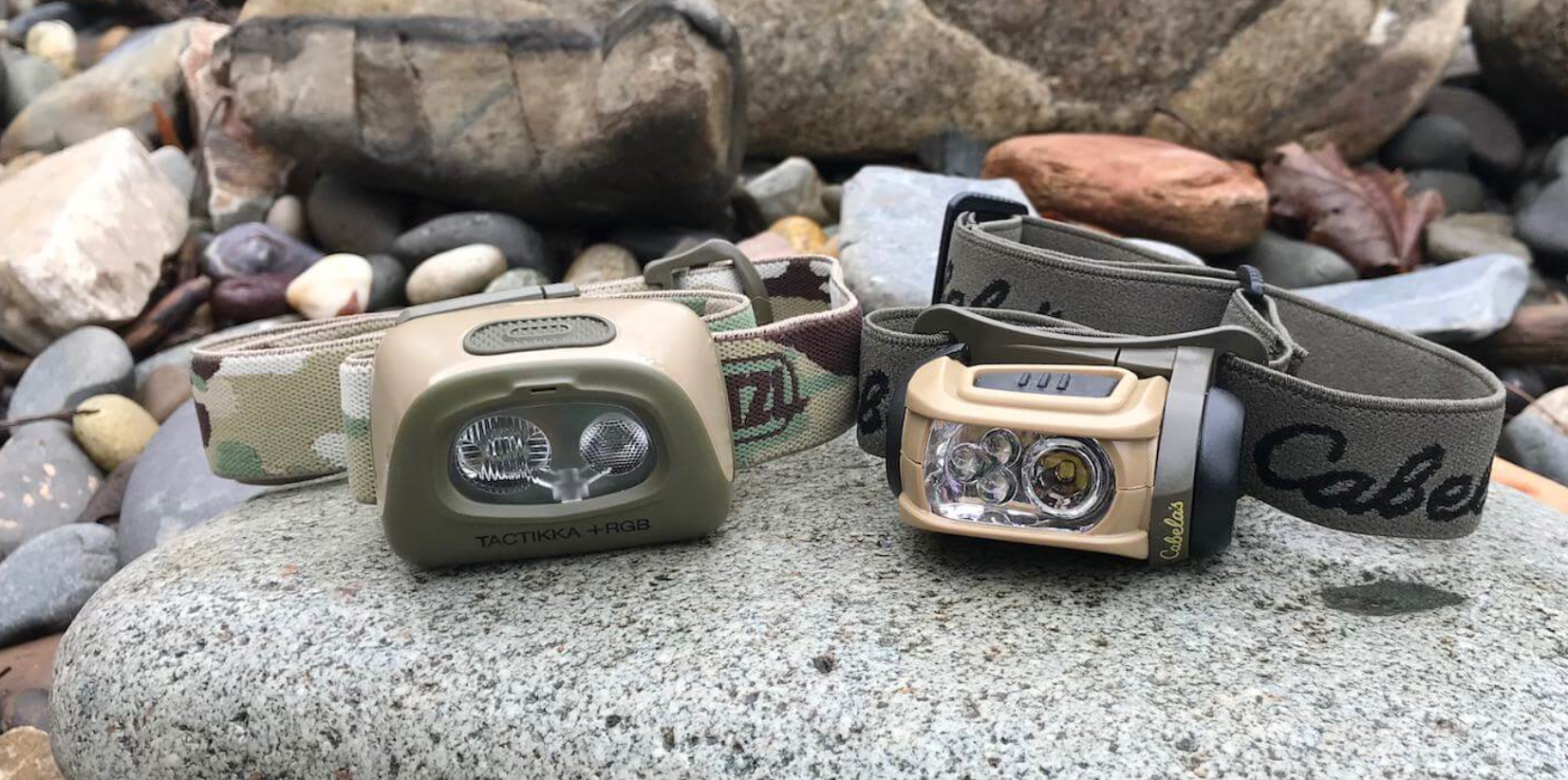
Best Survival Headlamp reviews
Hands-free headlamps are invaluable and endlessly useful in emergency situations. Imagine you have to change a tire or help an injured person in the dark. Are you going to hold the torch with one hand and work with the other?
Keeping both hands free while lighting automatically points where you’re looking—which avoids wasting energy where you’re not—preppers, hikers, campers, hunters, mechanics, and your hands. Very convenient for anyone working.
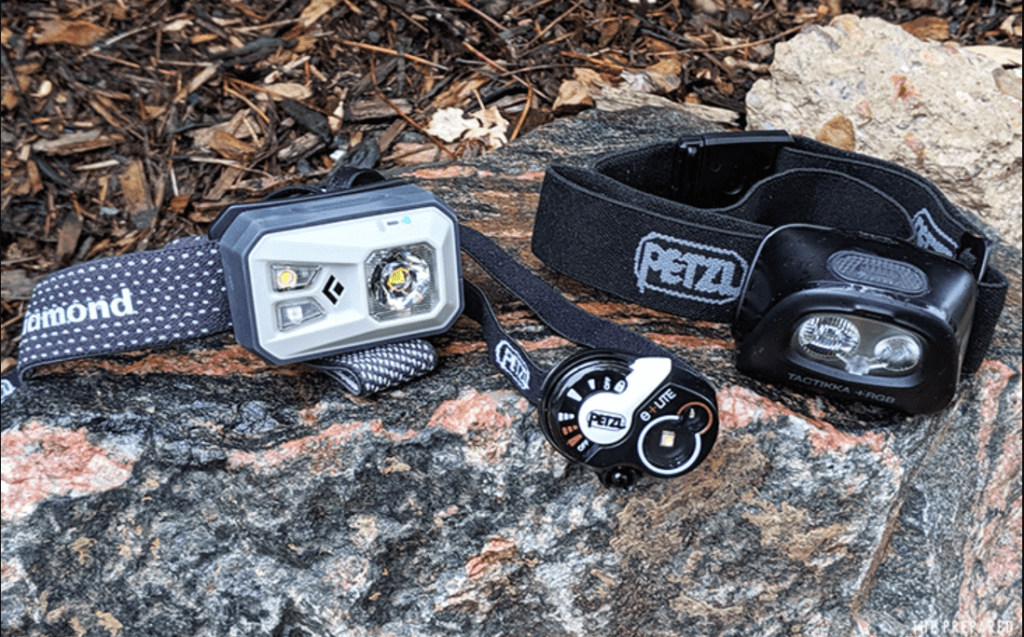
If you only have one powered light source in your emergency supplies, we recommend a headlamp. But the best answer is a mix of different types of powered and unpowered lights, including multiple headlamps:
- A basic, high-quality headlamp in your bug-out bag and another in your get-home bag. Since your Bug Out bag is always at home, you’ll have that central lamp with you while you’re inside.
- Secondary or backup headlamps for household goods, everyday goods, or various locations such as cars/boats and sheds/warehouses. These can be cheaper than central lamps.
- Headlamps work in conjunction with any handheld flashlights and candles/fire sources.
Industry insiders report that the past few years have seen major improvements in core product tech like brightness, battery life, and power efficiency — creating an even better return on investment for every prepper.
Headlamps are essential for your survival kit, bug out bag, or EDC. I’ve narrowed down the thousands of lights out there to the best headlamps for survival or disaster relief.
1. Zebralight H53F
The best headlamp for survival and preparation
The best headlamp to meet my needs is the Zebralight H53F. It is waterproof, made of metal, has low light settings, uses a single AA battery. It can be used as a flashlight or headlamp. Unfortunately there is no additional red setting or filter, but there are lights in red and white. A nice feature is the glow in the black strap which can be purchased separately.
But quality comes at a price. Zebra lights are not cheap.
- Price ($$$). Light Output 276-0.01 Lumens.
- Waterproof: IPX8 (2m, 30 minutes).
- Weight 79 grams
2. Denial E03H
The best headlamp for human survival and preparation
The Menker E03H is a very affordable and great headlamp. It is very similar to Zebra Light. It has an adjustable low light (moonlight) setting and is very easy to use.
A unique feature not found in other lights is that it comes with flood filters in white, red and green. I use a green filter all the time and slide it in when I need white light. The magnet at the bottom can come in handy when using it as a flashlight.
I had a momentary problem with the switch sticking, but it fixed itself after a while. I also dipped it and a few drops of water got in but the lamp still works perfectly. It’s not bombproof, but I’d still recommend it, plus the price is right.
- Price ($$) Light Output 240-0.1 Lumens.
- Waterproof: IPX8 (2m, 30 minutes).
- Weight 80 grams
3. ThruNite TH20
The best headlamp for survival and preparation
What sets the ThruNite TH20 apart is that it has a variable dimming feature that lets you adjust the brightness anywhere from the lowest to the highest setting. This is another great headlamp option for your bug out bag.
- Price ($$) Light Output 250-0.3 Lumens.
- Waterproof: IPX-8 (2m, 30 minutes).
- Weight 96 grams
3. HL23 Fenix
The best headlamp for survival and preparation
HL23 is similar to ThruNite. Although it is not as bright and adjustable. One design flaw I noticed is that the modes go from high to low, which instantly ruins your night vision. I like that the HL23 has the led light in the middle of the lamp instead of the end.
- Price ($$) Light Output 150-3 Lumens.
- Waterproof: IP68 (2m, 30 minutes).
- Weight 75 grams
4. Armytek Tiara A1
The best headlamp for army tech survival and preparation
If you want a versatile and reliable light for emergency situations, the Armitech Tyra A1 is another popular choice. It has very useful features like super low and super high brightness settings, but since it is high quality, it is not that cheap.
- Price ($$$) Light Output 450-0.15 Lumens.
- Waterproof: IP68 (2m, 30 minutes).
- Weight 71 grams
5. Sidewinder Compact II
The perfect headlamp for developing survival and sidewinders
The Sidewinde Compact II Compact is perfect for those who want the ability to have different colored lights for specific tasks and even an infrared light for use with night vision technology. It is easy to use with gloves and made for heavy duty use.
- Price ($$$) Light Output 47 Lumens.
- Waterproof: IPX7 (1m, 30 minutes)
- Weight 94 grams
6. Klarus H1A
The Klarus H1A is made of titanium and like all other survival headlamps above, it uses only one AA battery. What sets this headlamp apart is that it includes an AA USB rechargeable battery and has a red light function.
This headlamp is the most expensive, which is why I didn’t put it at the top of the list. It seems simple enough though.
- 90 ($$$$) Light Output 550 Lumens.
- Waterproof: IPX6 (exposure to water jets).
- Weight 96 grams
Best all-round headlamp: Black Diamond Revolt
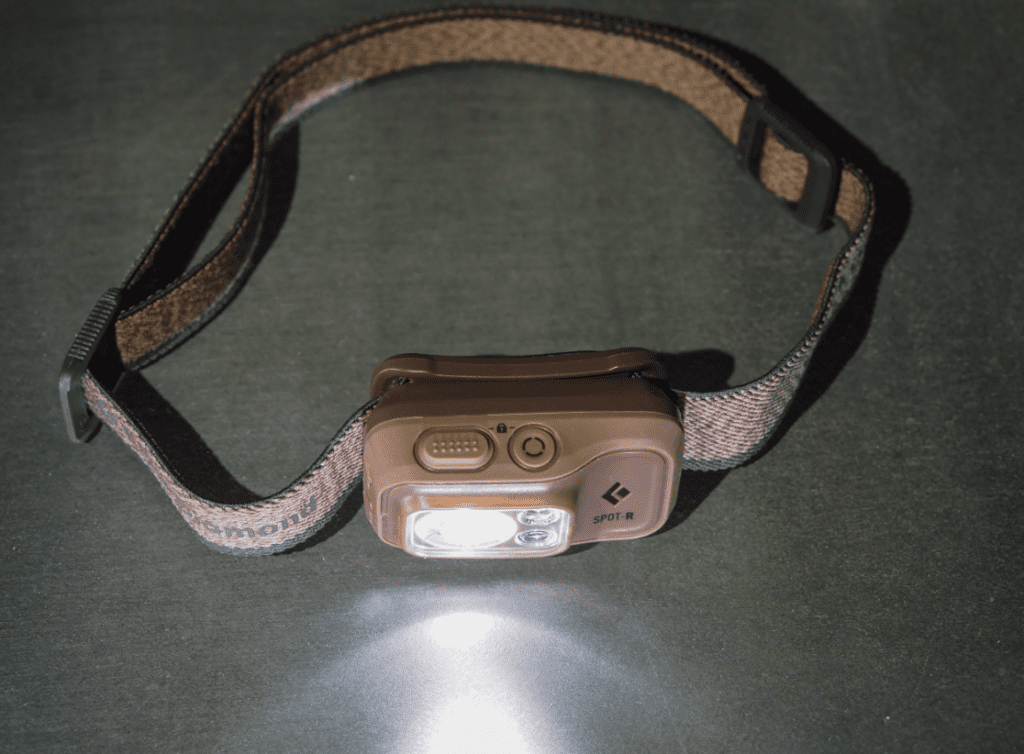
Black Diamond is a popular brand among hikers, climbers, and other outdoor types who expect their gear to work and work well. The Revolt is a hybrid headlamp, offering the option of power via included rechargeable batteries (charged via USB) or standard AAA batteries.
It gives a good brightness level, even at medium settings, and it’s small and lightweight.
There are several modes – spotlight, proximity, dim, strobe, red light, and locking function.
There’s also a battery indicator, so you’ll know when you’re running low on charge, and it’s one of the most waterproof models we’ve reviewed, so you can use it in inclement weather. No need to worry about using it.
The features take a bit of getting used to, especially since there’s only one button to switch between different modes, but once you get the hang of how it works, it’s the best for Revolt preppers. One of the best headlamps.
statistics
- Claimed battery life: 4 – 200 hours (depending on which battery is used)
- Recharge Time: Not Specified.
- Maximum lumens: 350 (using alkaline batteries)
- Weight: 3.2 oz
Best for battery life: NITECORE NU32
NITECORE offers 4 different brightness settings, from a ‘Turbo’ mode of 550 lumens to a very low 1-lumen setting that provides 330 hours of battery life.
NITECORE NU32 550 Lumen LED Rechargeable Headlamp with LumenTac Adapter with White and Red Beam
This is useful because it gives you a lot of flexibility to balance battery life and brightness.
The middle setting (33 lumens/50 hours) is likely to be a good compromise for most activities, but the very low setting will provide minimal light for basic tasks.
There’s also a red light, a useful battery indicator that helps you decide when to dim the brightness, and a locking function, so you don’t accidentally turn it on in your bag.
The inbuilt battery is rechargeable via USB – there is no option to use the lamp with alkaline batteries.
statistics
- Claimed battery life: 17-330 hours
- Recharge Time: Not Specified.
- Maximum lumens: 550
- Weight: 3.5 oz
Best for shine: Coast FL75R
Sahil may not be as well known as Petzl or Black Diamond, but the Oregon-based company prides itself on the durability of its headlamps, which come with a lifetime warranty.
It also allows standard AAA batteries to be used as a backup to the Li-ion battery pack.
COAST® FL75R Rechargeable 530 Lumen Dual Color Twist Focus™ LED Headlamp, Black
In terms of brightness to weight, the FL75R is one of the best headlamps available.
It also has excellent optical quality. You can quickly switch between spotlight and flashlight beam by rotating the light, and there are three different power options.
It’s worth noting that the ‘low’ power option is still 65 lumens, which is more than enough for close-up tasks.
It’s a shame that, given their reputation for durability, this lamp isn’t more waterproof. It will hold up to a light shower, but you might not want to risk it in the rain.
statistics
- Claimed battery life: 2.25-11 hours
- Recharge Time: Not Specified.
- Maximum lumens: 530
- Weight: 3.7 oz
Best Budget Headlamp: Foxelli USB Rechargeable
This fantastic, lightweight rechargeable headlamp is a great option for preppers on a budget or those looking for a secondary headlamp.
With a maximum output of 180 lumens, it’s not the brightest. You won’t want to use it for a nighttime walk through the woods, but it should be more than enough for close-up tasks. It also has recharge time and red light mode.
It doesn’t have the option to use alkaline batteries or the extra features of more expensive models, but it’s a great buy for a budget headlamp.
statistics
- Claimed battery life: Up to 40 hours
- Recharge time: 4 hours
- Maximum lumens: 180
- Weight: 2.4 oz (no battery)
Best Waterproof Headlamp: Fenix HM61R
The Fenix HM61R comes with a rechargeable Li-ion battery and a pair of non-rechargeable batteries for backup. The aluminum casing makes it durable and it has an IPX-8 waterproof rating, meaning it’s submersible up to two meters underwater.
Although the peak output is 1200 lumens, it is in ‘turbo’ mode. On ‘High’ the output drops to 400, which will give better battery performance.
There are three other ways to dim the brightness, as well as a red light mode that’s a bit more intuitive to switch to than the Black Diamond Revolt.
statistics
- Claimed battery life: 3-100 hours
- Recharge Time: Not Specified.
- Maximum lumens: 1200
- Weight: 5 oz (with batteries)
Best Spotlight Headlamp: SLONIK 1000 Lumen
While the claimed 1000-lumen brightness is a bit of an exaggeration, this headlamp’s beam is undeniably bright.
It’s a pure spotlight beam – there’s no floodlight option – and there’s no red light mode, which makes it less versatile than other models. You’re paying for a bright, reasonably priced headlamp with minimal extra features.
Battery life is nothing to shout about, but it is capable of recharging in just 2 hours. This is a plus if you don’t have mains electricity and need to charge items with solar or another portable charger.
It’s also lightweight, and the beam can easily rotate up to 90 degrees. The casing is sturdy and has an IPX6 rating, meaning it’s waterproof but not submersible.
statistics
- Claimed battery life: 3.5-8 hours
- Recharge time: 2 hours
- Maximum lumens: 1000
- Weight: 4.2 oz (including battery)
Best for close work: Streamlight 51064
The Streamlight has both a high-power spot beam and a floodlight for close work. You’ll appreciate the bright, even light if you have to do detailed close-up work at night (like fixing that generator that cut out again…).
Battery life is also good – 5 hours on high power and 20 on the lowest setting.
Streamlight 51064 Twin Task USB Headlamp, Black/Red, Boxed – 375 Lumens
It’s designed to withstand bumps and scratches but only has an IPX4 rating, so it’s not the most waterproof model. It also doesn’t have a battery indicator or a lock mechanism. This headlamp is best used around the house or at your bug out location rather than surviving in the wild.
statistics
- Claimed battery life: 4.75-20 hours
- Recharge time: 4.5 hours
- Maximum lumens: 375
- Weight: 6.1 oz
Best for comfort: BioLite 330
If you hate the feeling of wearing a headlamp, check out the BioLite – our top pick for comfort. It’s an extremely low-profile lamp, and the headband design distributes the weight, so it feels like wearing a fabric sweatband. No more pressure points!
There are spot and flood light beams, and the front tilts so you can angle the beam. It’s designed to be bright enough for nighttime operation, so it should work for most general prep tasks.
Battery life isn’t bad for a small headlamp, and it recharges quickly. If you have a power pack in your bag, you can also use it while charging.
It’s only rated IPX4, meaning it’s not particularly waterproof, but other than that, the BioLite is a good option for your bug out bag. Oh, and it looks very stylish too.
statistics
- Claimed battery life: 3.5-40 hours
- Recharge time: 2.5 hours
- Maximum lumens: 330
- Weight: 2.4 oz
Best for brightness on a budget: Everbeam H6 Pro
This is a high-end headlamp that comes in a featherlight 2.5oz.
It is also cheaper than most and has a bright beam for the price. We love the clever motion sensor switch, which means you can turn the light on and off by waving your hand in front of it.
Everbeam H6 Pro LED Rechargeable Headlamp, Motion Sensor Control, 650 Lumens Bright 30 Hours Runtime 1200mAh Battery USB Headlight Torch, Camping Hiking Fishing Work Waterproof Torch
The battery isn’t amazing, but the red warning light lets you know it needs charging, a handy feature. While this headlamp isn’t the best in any particular area, it’s an all-around rechargeable headlamp at a budget price.
statistics
- Claimed battery life: Up to 10 hours
- Recharge time: 3-4 hours
- Maximum lumens: 650
- Weight: 2.5 oz
Best Ultralight: Petzlbandi
As we’ve already discussed, it’s generally better to choose brightness and battery life over weight for design purposes. But if you want a featherweight headlamp, at just 1.2 oz, the Bandi is one of the lightest rechargeable headlamps around.
Petzl Bindi Headlamp – Ultra Compact Rechargeable 200 Lumen Headlamp Designed for Everyday Athletic Activities
The Bandi has 3 power modes ranging from 2 hours of battery time to 50 hours on the very dim setting. That said, if you do go for this headlamp, you’ll want to make sure you have a means to charge it frequently.
The thin elastic strap isn’t the most comfortable, and it’s expensive for what you get, but with the Bandi, it’s all about the (low) weight.
statistics
- Claimed battery life: 2-50 hours
- Recharge Time: Not Specified.
- Maximum lumens: 200
- Weight: 1.2 oz
Headlamp or flashlight for your bug out bag?
There is no doubt that headlamps are the most versatile and practical. If you ask any experienced backpacker or mountaineer, they will tell you to pack a headlamp.
If you need to use both hands for certain tasks, you will need a headlamp.
Some of the lights I’ve mentioned below are usable as both headlamps and flashlights, so you get the best of both worlds.
Battery life
Having a headlamp with a long battery life is essential. And being able to choose different brightness levels can extend runtime. In an emergency, saving battery can be a big deal. This is where dimming comes into play.
Dim
It’s very important for me to be able to turn the headlamp on a very low setting and then turn up the brightness if I need more light, not the other way around. Nothing ruins your natural night vision faster than bright lights.
I always use the dimmest settings to preserve my natural night vision. It preserves my peripheral vision and awareness, as well as my ability to see beyond the range of my light.
The Color
Light colors are useful for different situations. Signaling, hunting, and preserving your natural night vision (and those around you) are just some of the uses of different colored headlamps.
Red light is the hardest light to see because it is near the edge of our visible spectrum, so infrared light (infra = further) is invisible to us. This makes red light perfect for hunting and stealth. The military uses red light because it is a color that is less visible at a distance. Some animals are less sensitive to red light, so they are less likely to be afraid of it.
Blue is useful for detecting injured animals, as it makes blood stand out.
Green light is the light that appears the brightest, because we are most sensitive to it. We can distinguish more shades of green and see it from a greater distance.
Night vision devices show shades of green because we can see with more definition than if they used shades of white/grey or red. Green light is the best color (at very low brightness) to preserve your night vision.
One advantage of colored light is that when it is very dim, and your eyes adjust to the dark (which takes about 30 minutes), it will appear white. This is useful when you want to preserve your night vision, because the moment you start seeing the color of your light, you’ll know you’re blocking your night vision. Another advantage is that colored light attracts fewer insects.
White light is best for viewing in true colors, which comes in handy when reading a map that features different colors.
waterproof
Thanks to Murphy’s Law and past experiences, I only buy waterproof gear. IPX7 or IPX8 are the only waterproof standards I trust. This means that the device can be submerged in 1m of water for at least 30 minutes.
Even the latest smart phones are waterproof these days, so I don’t see why my survival headlamp wouldn’t be waterproof too.
Rechargeable
I use my headlamp often, and I don’t want to buy batteries all the time, so I like rechargeable headlamps. Only thing is, I would also like to have the option to use regular batteries. This is because I might not be able to recharge them or they might get damaged. The power may be out or it may be too cloudy for my solar charger to work.
Many headlamps cannot operate on both proprietary rechargeable batteries and regular AA or AAAs. The best solution I have found is to use rechargeable batteries.
But battery chargers are a lot, and I want to keep it simple.
I use USB rechargeable batteries; They can be plugged in directly with a USB cable and charged via any USB charger.
Battery size
AAA and AA batteries are the most widespread batteries in the world.
A AAA battery is smaller and smaller than an AA but has the same voltage. They also have almost the same energy to weight ratio.
The lightest headlamp will run on a single AAA battery. There are two downsides to this though, the lower energy capacity means less run time and more batteries to carry around.
Here are the main reasons why AA batteries are the way to go for survival headlamps:
In the remote case that you need to remove the batteries in an emergency, AA headlamps can work with AAA batteries with an AAA->AA adapter (or aluminum foil), while AAA headlamps do not use AA batteries. can
AAA vs AA Best Headlamps for Survival
Battery quantity
Single battery headlamps are best. You can remove a single battery completely. When using two or three batteries, it is likely that they will not be used evenly. It’s always a pain to know which batteries are dead and which still work. Headlamps that use only one battery eliminate these problems.
Lumens
Headlamp brightness is usually measured in lumens. A standard 60-watt light bulb in your home produces 600-800 lumens. Headlamps generally come in these ranges:
- 25-100 lumens: Good for simple things like going to the bathroom at night.
- 100-200 lumens: Best for simple outdoor work, such as cleaning a campsite at night.
- 200-300 lumens: Best for finding trails in the dark or walking at a fast pace (like jogging).
- 300-500 lumens: You will be able to do any normal outdoor activity.
- >500 lumens: Typically used for technical skills, such as rock climbing at night, or industrial work.
Ease of use
Ease of use is a difficult criterion. We always like to do the “10-year-old test” when reviewing emergency products, because you want gear that’s simple and intuitive enough that a 10-year-old can use it in a crisis without help or instruction.
But there’s a trade-off: Controls are easier when the lamp has less important features, like a red night vision mode or a lockout mode that keeps it from accidentally turning on in your bag and wasting battery life.
Some of the most popular headlamps (like the Black Diamond Spot) are less intuitive than the competition. It often comes down to one button versus two buttons or a rotating dial.
A common annoyance is whether you have to toggle from white light modes to go to red light mode, or vice versa. While we prefer models where you can directly turn the red mode on and off without touching the white modes, this isn’t a deal breaker—you’ll learn to cover the light with one hand while toggling the button with the other.
Value: Cost vs benefit
In a world full of cheap headlamps, you usually get what you pay for. In the US, imports of cheap appliances and flashlights have increased recently. That means there’s a lot of crap out there, but there’s also stiff competition. To stand out, manufacturers must be price sensitive and aware of their quality and service.
You don’t want to spend a lot of money on a resource like a headlamp. Using your money is a great way to get the most functionality and versatility out of your survival kit. There’s a sweet spot where you get more than great functionality for a fraction of the price, which is where our top picks sit.
Comfort
Size and weight contribute to headlamp comfort, but there are other factors as well. The padding and adjustability will let you wear the headlamp longer. Lightweight headlamps can be held around the head with just one strap, but heavier ones require an additional strap on top. Top strap headlamps are becoming less common, simply because you can get great power from a smaller light casing with better LED and battery technology.
Strap weight and quality are the biggest contributors to comfort in our tests. Any of our selections, with proper strap adjustment, will be very comfortable on your head – even without a top strap.
How to use a headlamp
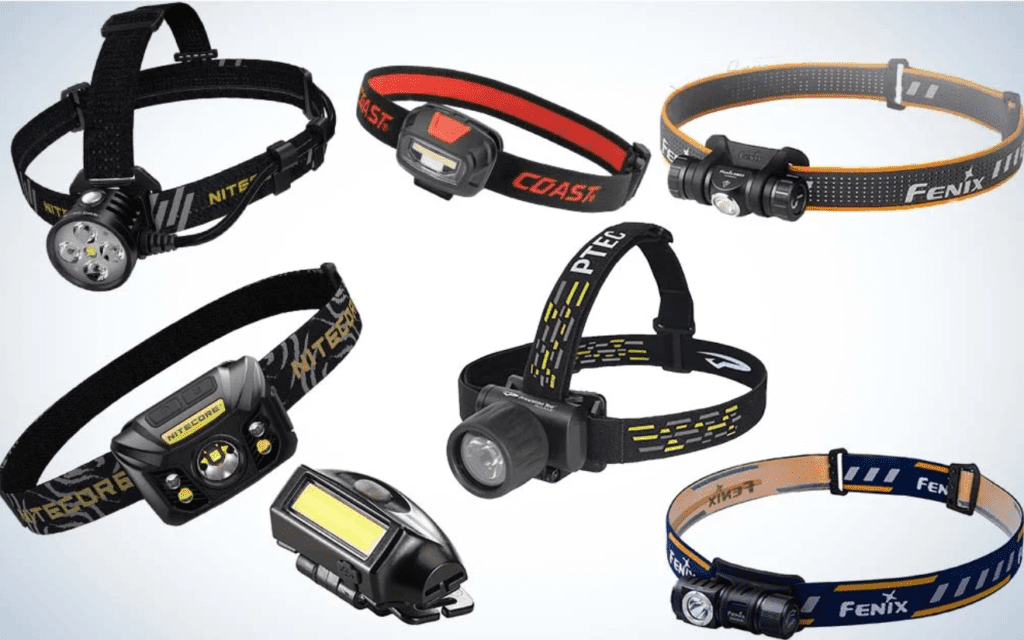
Headlamps are very easy to use, but they are also surprisingly versatile. To use the headlamp to create light in front of you while keeping your hands free (primary use of course) – you just adjust the strap to fit your head, turn on the headlamp and turn it on. This makes headlamps great in and of themselves, but their alternative uses are really what propels them to the top of prepper lists. Here is a quick list of just a few of the many uses:
Flashlight: Hold your headlamp in your hand to direct the light easily. Very simple, but still versatile.
Lantern: You can wrap a headlamp around a clean water bottle or gallon of water, turn the headlamp inside out and turn it on to make a lantern.
Signal device: Click the headlamp on and off to send light signals. Knowing Morse code or common light signals can help.
Map reading: Use a headlamp to keep your hands free for map charting and reading with a compass and other tools. Throw a tarp or large parka over yourself to do this without light pollution.
You can also use a headlamp for many everyday activities, such as running, camping, biking, reading, home repair, and truck maintenance.
Who needs a survival headlamp?
Headlamps are such a versatile lighting tool that they can be found in almost every type of survival kit. Keeping your hands free and your surroundings well-lit is a huge advantage during emergency situations. Headlamps are also useful every day—from working and maintenance in your crawlspace or attic, keeping your hands free on a camping trip, or just a quick run in the evening or morning.
Headlamps are an integral and integral part of these kits:
- Big Out Bag (BOB)
- Get Home Bag (GHB)
Headlamps are recommended additions to these kits:
In-Place Survival Kit
No matter what dangers may come your way, a headlamp is one of the best lighting solutions you can have for a survival situation.
Key Features of Best Headlamps
It’s no secret that headlamps are an integral part of our lives. By using them in activities like hiking, repairing cars and other equipment, and traveling, we simplify our existence and save time. Therefore, high-quality headlamps should have a simple design, an advanced feature set, and an excellent illumination. Choosing the best equipment is not such an easy process. In this regard, we need to consider the most important features of the best headlamp. Read the following explanations carefully.
Lumens and LED lights
When buying this lamp, the buyer does not understand the incomprehensible technical information on the packaging. If everything is clear with power, there are problems in understanding many specific terms. LED lights have several technical features:
- lumens and weight
- Light level indication
- Color rendering index
- Color temperature
- Beam spacing
- Battery life
- Maximum output
Lumens is the amount of light emitted by a headlamp. In other words, it is the power of light itself. The more lumens, the brighter the light. However, keep in mind that brightness is not always useful. It often impairs your vision.
Beam distance of the best headlamp items
Aside from lumens, an important characteristic of headlamps is the beam distance. The best optics is how far you can see in the dark. The wider the range of light, the more efficient the headlamps work. Thanks to this property, you will have less walking time and more comfort. Note the beam distance when looking for the best headlamp.
Beam pattern
In addition to beam distance and lumens, beam shape plays a significant role. When the light beam leaves the LED, it starts scattering in different directions. If focused on a lens or reflector, the light loses its intensity and brightness. So it is better to buy headlamps that have brighter LED bulbs. As a rule of thumb, light intensity is inversely proportional to the square of the beam distance. The higher the power source’s rating in lumens, the brighter the light. However, don’t forget that lenses and reflectors are also extremely important, as they control the projection of light. These are the laws of physics!
Battery life or battery pack
I believe most headlamp buyers are interested in battery life. Generally, battery life depends on the materials used and the manufacturing technology. The better they are, the more you will use the headlamp.
Using a headlamp not only provides excellent beam distance and lumens, but also battery life. After all, sometimes we need that much time to read books or go hiking. In general, battery life also depends on maximum output! In emergency situations, it’s best to save battery power and turn down the brightness. Don’t forget to turn off the headlamp if you’re not using it.
Types and characteristics of batteries
The US market is flooded with different batteries as manufacturers are inventing more and more new batteries. So keep the quality and battery life in mind while choosing a headlamp. Below are several types of collectors and their features.
1) Rechargeable headlamp
Rechargeable batteries are more commonly used than others. Their main advantage is the ability to renew the charge. So people don’t need to buy extra removable blocks. In addition, their configuration is not a complicated process. Of course, accumulator batteries are more environmentally friendly and more compact. However, they are inconvenient to use on long trips as the battery drains quickly. This is why it is better to buy rechargeable batteries!
2) Lithium ion battery
A lithium-ion battery can be extremely useful and at the same time harmful in some applications or even dangerous due to its shortcomings. Over the years, technology is improving, the number of minuses is decreasing, and the profession is becoming more accessible.
Lithium batteries contain lithium ion, so they are more powerful than alkaline batteries. Of course, it will be difficult for you to find them as the consumables are more expensive and less available.
High energy density allows electronic devices to operate longer without recharging with smaller battery sizes. The more energy the device needs, the higher the energy density in the battery must be. The problem with rechargeable batteries is the loss of charge without use. Lithium-ion cells have a barely noticeable self-discharge rate. By the way, such collectors weigh less than others. But these batteries deserve your attention.
3) Alkaline battery life
Alkaline batteries are cheap, and you can easily find them in stores. It is also common to have multiple alkaline batteries in one package. The main element is manganese dioxide, which is the cathode. Its anode is zinc, and the electrolyte is potassium hydroxide.
Advantages include:
- Safety
- Increased power
- Ability to use in different situations
- Less risks of housing leakage and deformation
- Wide selection of standard sizes
- Long shelf life and service life
Disadvantages include:
- High cost of high quality batteries
- The need for disposal
- Ability to self-exclude
4) Double option
The best headlamps have batteries that can be removed and replaced. Usually, such a power source has a standard size (AAA batteries). By the way, many users appreciate this type of battery because it is easy to use. They also have a flexible layout and detailed instructions.
Easy to use
Despite the light output and maximum output, the key indicators are the correct fit on the belt and head. I believe the density determines a lot about the use of the headlamp. Generally, your job is not to lose or break a headlamp while you’re walking around camp. But if the belt is weak, you will lose your device. On the other hand, it should not be too tight! Otherwise, it will put pressure on your head.
Final word
A headlamp may seem like a small and unusual light source, but they are the ultimate light when you need it. Being able to see in the dark and at night is vital for survival and emergencies.
In addition to headlamps, there are a few other sources of light you can consider for survival:
- Flashlight
- EDC flashlight
- Emergency light/radio/charger
- The lantern
- A charged cell phone
- Also, you can always start a fire to create light.
I recommend the ThruNite TH20 as the best option that is affordable and reliable. The best headlamp for survival is the Zebralight H53F. Although it is more expensive. Pair it with USB rechargeable batteries and you’re set.