How to make survival stove review
I’ll be open about the fact that it took me a long time to come around to the idea of an outdoor survival stove. I was rather an old school thinking about them for a long time and thought they were unnecessary. It occurred to me that as long as I could make a fire, why did I need a stove? Like many things, with age comes clarity and I began to see some of the great advantages of this gear.
Before we get into the nitty-gritty, let’s review the top stovetop products that I recommend:
Natural fuel stoves
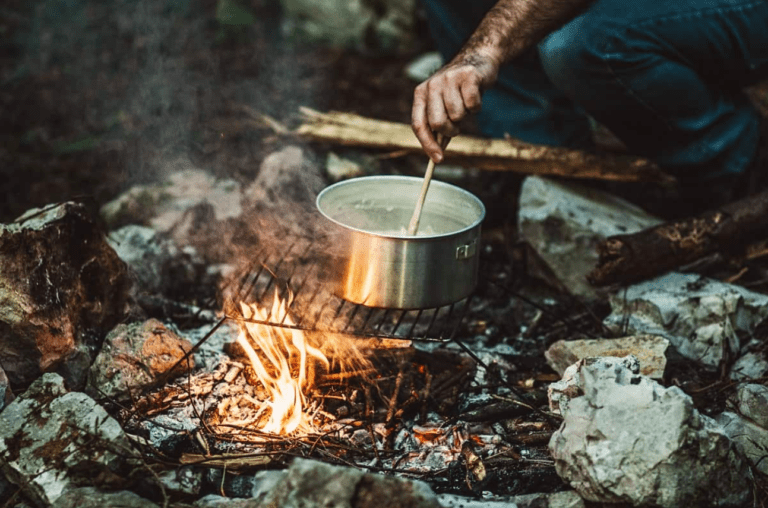
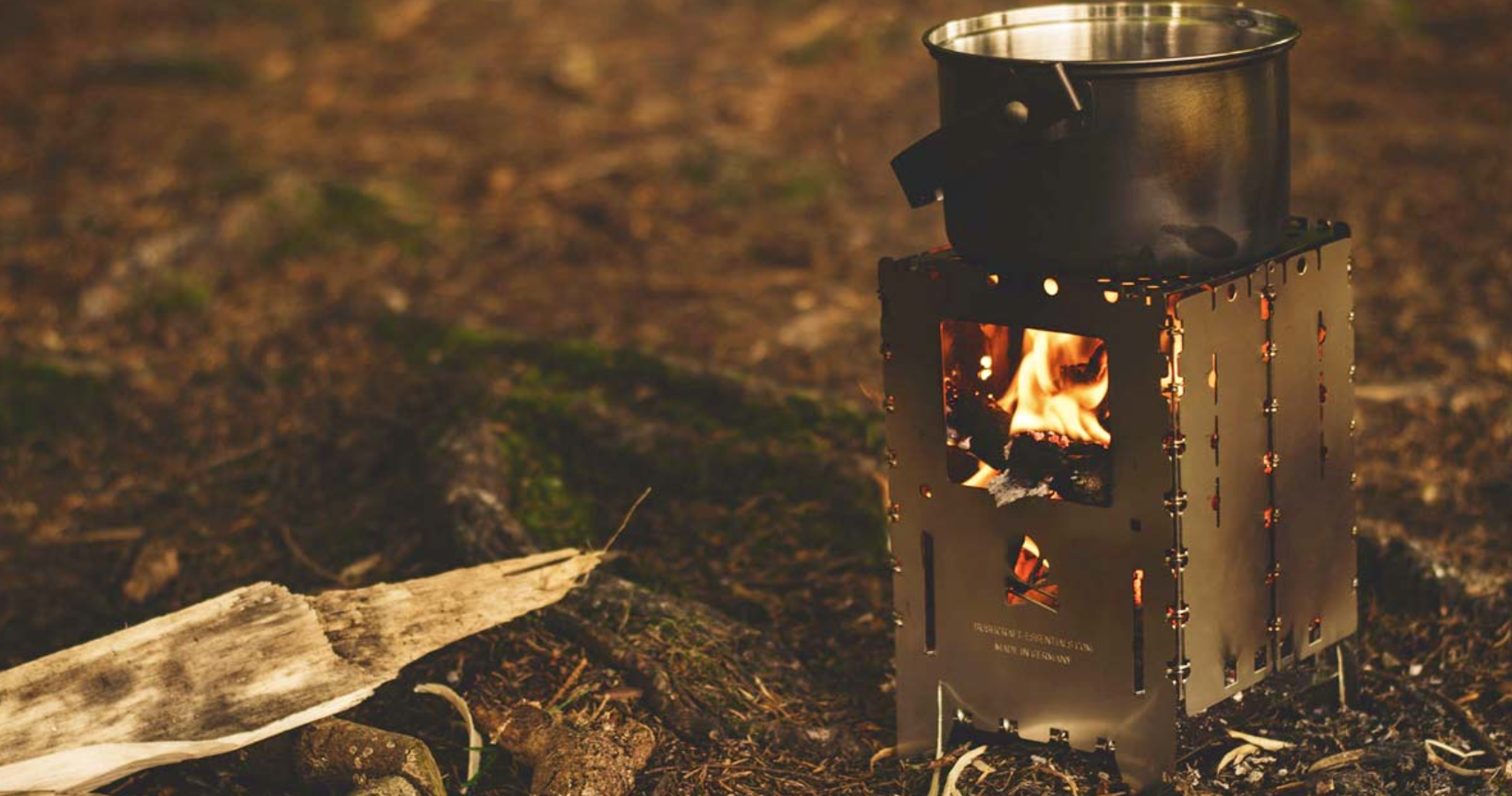
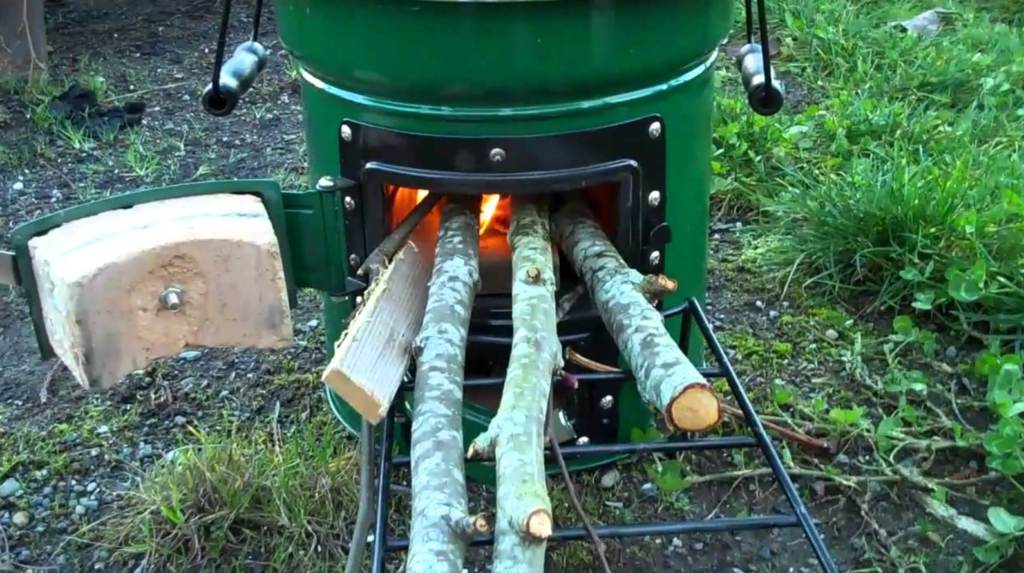
These are the most basic types of stoves to carry. It is a framework that contains natural materials from the environment that are being used for fuel. Simply, they are metal containers in which wood, hay, and pinecones (called biomass) are burned.
These containers aren’t always that simple, but I’ll get into that later. For now, just know that this type of stove requires gathering fuel from the surrounding environment.
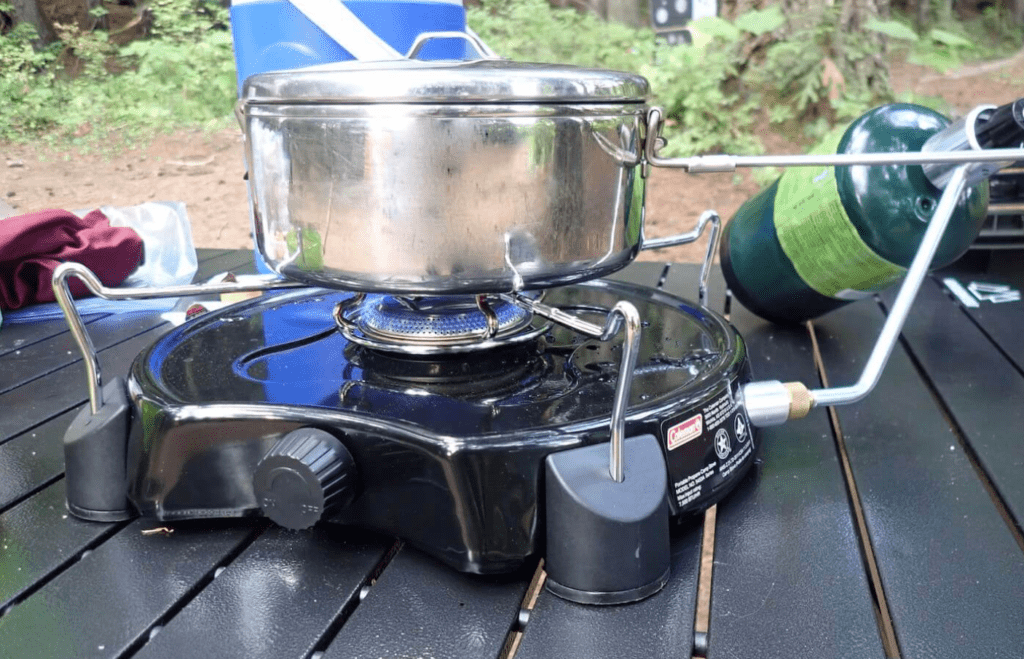
Canister fuel stoves.
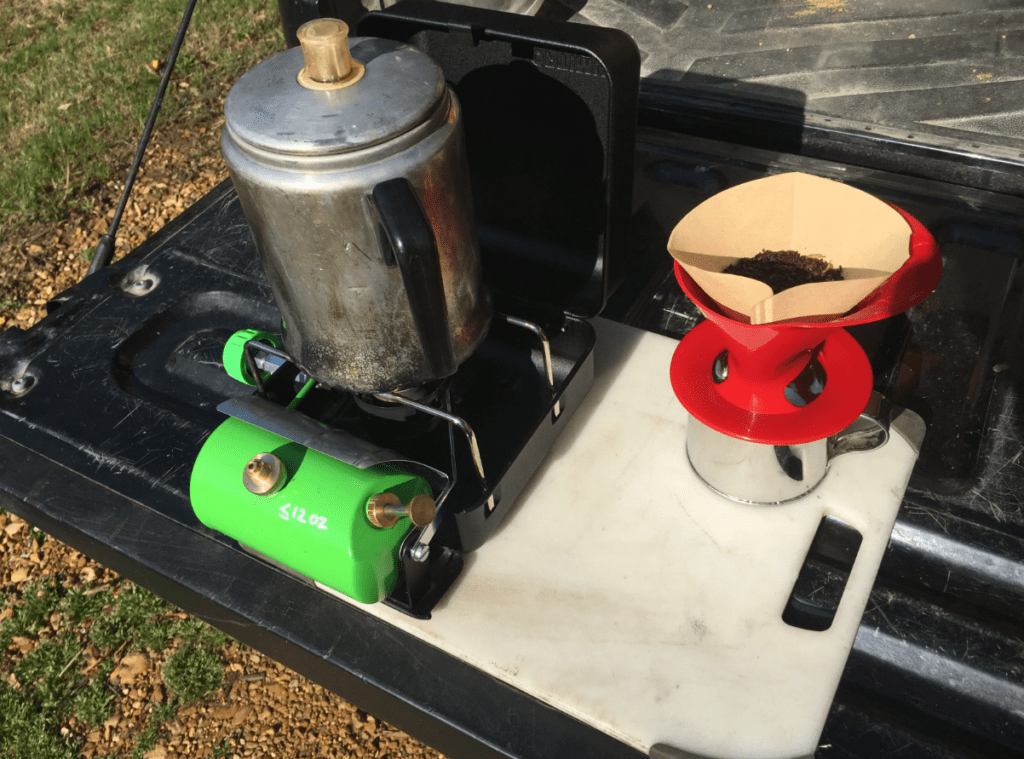
For this category, a fuel container is attached to the stove that can be turned on and off at will. There are several different fuel sources to consider when purchasing one. These fuels will react differently depending on your environment or altitude. Therefore, it is important that you do your research and see which one will serve you best.
Solid fuel stoves
Solid fuel stoves are similar to natural fuel stoves but with one important difference. They are designed to burn preformed fuel pellets. Therefore, usually, the stove itself is a little smaller because the hearth is smaller.
Best Survival Stove: My Top 4 Picks
With all of this in mind let’s take a quick look at the best survival stove products out there. They are listed in no particular order.
1. Hot Fire – Solo Stove Light Review
Solo Stove Light Portable Camping Hiking Survival Backpacking Stove Powerful…
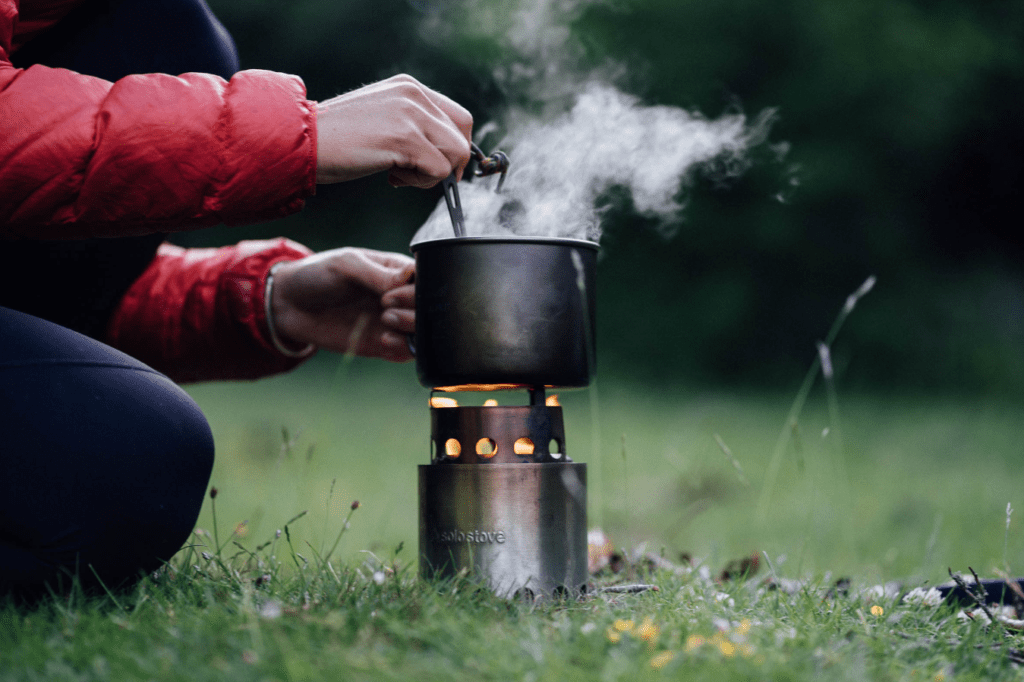
I have had this stove for a few years now and have really enjoyed using it. It’s super lightweight, and I barely noticed carrying it in a pack or car. The double-wall design recycles preheated air creating a hotter, more efficient fire with less smoke. When I heated water on this stove, it took about ten minutes to boil. This is a little longer than the advertised time frame but the boiling time depends on a few things such as the altitude, the type of fuel being burned, and the water is heated. In terms of smoke, this is again based on the type and amount of material being burned. But I will say that the stove I’ve used produces very little smoke in general.
I have boiled water and cooked food on this stove and I think it works well. However, if there’s one thing I don’t like about this stove, it’s how quickly the fuel burns. This system relies on air circulation for this hot burn and after a while, the ash will settle to the bottom. The fire may still burn inside but not as hot. My one tip would be to make sure you have a decent amount of fuel ready.
Pros
- Designed as a rocket stove
- 5.7 inches tall by 4.25 inches wide
- Stainless steel
- Removable cooktop
- No need to carry fuel. Burns biomass (shoots, leaves, pinecones, etc.)
Comes with a drawstring bag for transportation.
Cons
- Slightly more expensive than natural fuel stoves go
- The carrying case is cheap.
- Fuel is used up quickly.
No need to carry fuel. Burns biomass (twigs, leaves, pinecones, etc.).
2. Best Survival Stove Kit – Kelly Cattle Scout Ultimate Kit Review
The first thing to note about this product is that it is not just a stove but a complete kit that includes a pot with lid, hobo stove, frying pan, grill, pot gripper, two cups with CooLip protectors, Includes two plates and two bowls. It all packs down nicely inside the kettle but that brings the weight down to 4.6 pounds when considering how far you might need to carry it. Fortunately, there are many other models to choose from that vary in size, materials they’re made from, and if any extras come with them. All additional options will reduce weight. However, the basic system of just a hobo stove and small kettle still weighs 1.2 pounds.
I have had the pleasure of using this model for quite some time and I have to say it is one of my favorite kits. If I just want a fire, I fire up the hobo stove. The stove is spacious and because of the opening in the side wall, it is very easy to add fuel. If I want to boil some water, the included kettle holds up to 41 oz and boils very quickly. Also, the cups, plates, and extras look great. And everything in this kit is of high quality in my opinion.
An interesting aspect of this stove is that there are actually two cooking modes. The first method is to cook directly on the hobo stove. Been there, done that and it works great. Another method is to place the kettle on the stove, then place a pot base on top of the kettle and finally place the cooking pot in the base. I have used this method several times and it works very well. However, I would offer a bit of caution. The system can be a bit heavy when using a kettle so make sure the fire base is on the flattest ground available.
Pros
- All inclusive kit
- Comes with a water container.
- Very durable
- No need to carry fuel as it burns biomass.
Cons
- Heavy, 4.6 pounds
- heavy
3. Budget Friendly – Coghlans Emergency Stove Review
Coughlan’s Emergency Camp Stove Multi, One Size
At 10.1 ounces, this stove feels a bit heavy for it. It can be a good choice for a budget minded individual. It worked as advertised but it doesn’t throw much heat.
Pros
- Incredibly affordable
- Any solid fuel such as Sterno or other types of fuel pellets can be used.
- Lightweight and compact
Cons
Best used with solid fuel sources.
- Not very resistant to the elements
- Coghlans Emergency Stove.
- Incredibly affordable.
- Any solid fuel such as Sterno or other types of fuel pellets can be used.
- Lightweight and compact.
4. Best Survival Wood Stove – Biolite Camp Stove 2 Review
I have to admit that when this stove first came out, I was surprised. I mean a stove that can charge a battery, sounds pretty cool right? I can definitely see the utility of being able to charge dead devices in a survival situation. This is especially true if those tools can help improve your situation or guide you to safety. But after some research, I have seen some discussions about battery output and longevity of internal fans. Another concern I would have is how well does the technology part hold up when it gets knocked around or if it gets wet? It’s not always a peaceful walk in the woods.
Pros
- Burning biomass produces electricity and stores it in the ship’s battery.
- Can be used to charge devices via a USB port.
- Adjustable internal fans for warm fires.
Cons
- 2 pounds
- Expensive
Things to Consider When Buying a Survival Stove
Some of these features I look for when deciding to buy a stove.
Environment
The first thing I consider is the primary environment in which it will be used. Me, I spend most of my time in environments where natural fuels are abundant. So, I lean toward a stove that burns natural materials. However, if I were to spend most of my time in an environment where the opposite was true, ie at sweeter, higher altitudes, a canister stove would be the more logical choice.
Taking it a step further is considering the time of year. I live in an area that gets snow and ice in the winter. Now I have to take into account the cold temperatures and the difficulty of finding dry fuel. If hypothermia was a problem, it was important to start the fire as soon as possible. This is when it pays to choose two different stoves. So, it might be a safe bet for me to replace this natural fuel stove with a canister one during the winter.
The weight
Anyone who has put on a pack and hiked around for a while knows that every ounce of that pack makes a difference. You don’t want to lug around a heavy, bulky stove system when you’re running low on energy. Fortunately, most outdoor stoves today are quite compact and lightweight. However, there are some kits that are not, as I will mention later in the product section.
What the stove and its components are made of is also something to keep in mind. This not only adds to the overall weight but also indicates the durability of the unit and how it will hold up against the elements. I’m a fan of stainless steel. Although it can be a bit heavier than other materials, it is water resistant and holds up well for carrying around in a pack.
Cooking?
Another question you need to ask yourself before buying a stove is what are you going to use it primarily for. Are you primarily going to heat cups of water, hydrate food pouches, or cook large meals? You’ll want to make sure the stove is stable enough for the way you’re using it. Personally, I’m not too keen on the idea of cooking food to be dropped on the ground. Dirt does not make a very good spice.
Skill set
This is something I’ve never heard of when it comes to stoves but I’m sure it’s worth mentioning. A natural fuel stove is really no different than a campfire.
The only difference is that the fire is in the container. So, it makes sense to me that a person using this type of stove should be well versed in the various techniques of starting a fire and have the accessories to go along with it. Some methods include the use of lighters, matches, flints, ferrocerium rods, magnifying glasses, bow drills, pump drills, etc.
For example, what good is a stove if I only know how to put out a fire with a lighter and that lighter becomes unusable? So keep your skills in mind while choosing a stove.
What is a natural fuel stove?
I recently had a conversation with a friend who came up with an interesting idea about this type of stove. Some people think they’re unnecessary because they’re no different than making a campfire, he said. While I agree with him in that respect, there are several reasons why I prefer them over a regular campfire.
They provide protection from elements such as wind to help start and sustain a fire.
It will be easy to put out the fire.
I don’t have to worry about smoldering embers rekindling the fire hours later.
If you have gloves or some tools available, the fire can be easily moved. Whether it’s to get it out of the rain or a means of getting it from point A to point B.
The heat is more directional and I can control the temperature better.
Some stoves provide a cooking or heating surface.
Some stoves come as kits, which provide additional pots, cups, pots, pans, etc.
In survival situations, what I have is what I have. By thinking outside the box, I can use the design of the stove for other functions. If I don’t have a canteen, maybe I can use it to collect water. Or if the exterior is shiny I can use it as a signaling device. Some stoves have wire grills or grill attachments. Perhaps this grill would be better used for making fishing hooks. Be creative in how you can use your stove for other purposes if needed.
Pros
- Light weight
- Compact
- As long as there is fuel to collect, natural fuel stoves will operate indefinitely.
- Canister fuel provides instant fire.
- No need to forage for fuel from the canister stove.
- Canister stoves operate in environments where natural fuels are not available.
Cons
- Canister fuel is limited. The stove does not work after running out of fuel
- Any stove is going to take up space and add weight.
- Natural fuel stoves only work in environments where fuel is available for storage.
Bushbox XL Survival Stove Review
The perfect wood burning stove for wild camping or bug outs.
First of all, a good cooking stove is an essential part of your bug out kit and it needs to meet a few specific requirements to be considered worth taking with you.
Must be compact to carry, yet large enough to maintain good heat for cooking and boiling water.
- Uses primary fuel, i.e. wood.
- Easy to maintain a steady fire
- Easy to clean
- Reliable and solidly built.
The cooking stove I chose to accompany me on a few nights of wild camping was the Bushbox XL (Extra Large), made by the Bushbox Company based in Germany.
The Bushbox XL is the big brother of the Hobo Stove.
Bushbox Survival Stove XL
The XL version I’m reviewing here has an all-new design that makes this stove very compact and super easy to set up, fold, and carry.
In fact, the XL is possibly one of the easiest to assemble survival stoves I’ve ever known – it goes from folding to ready to use in seconds.
Folded down and inside its carrying case I measured the overall dimensions to be just this:
210mm x 95mm x 20mm thick MAX. – Weight only 800 grams.
It was a comfortably acceptable size and weight to carry considering the finished, usable size of the stove.
*Standard XL comes as a stove only with two trivet stands and is packaged in a cotton pouch.
Bushbox XL Compact Folding Bottom
The Bushbox XL I have here has additional accessories that make up the combination kit, and these are a heavy duty outdoor carry bag and a universal grate.
This setup is great and gives you a custom carry bag that can fit everything in it.
This kit is currently priced from £86 inc. VAT and delivery.
Additionally, I think it’s reasonable to spend that much for a combination kit. As it provides all the extras you need in a cooking stove.
The outdoor carry bag is very well made and fits perfectly with the stove plus the universal grate.
The universal grate can be purchased separately.
Bushbox XL Combination Kit
Another great use I found for the Universal Grate was to use it with the Trangia Spirit Burner.
The carry bag also has a ‘D’ stitched in color which again fits very well and will require a lot of stretching to work loose.
This is a nice feature as it means everything can be easily attached to your rucksack saving valuable space inside.
So overall, I’m glad I have the collection kit as opposed to just the bush box. For the sake of the extra £10 or so, I think it’s worth getting.
Solo Light Stove Review
I like to use a solo light stove when I feel like having a fire at night to cook and get in the mood but don’t want to build one from scratch. For longer trips where you don’t have access to a resupply point, cooking with wood is a great fuel and cost-cutting strategy provided you are allowed to have a fire where you hike and dry wood is available. Is. However, you may want to pack a few Esbit fuel tablets as an emergency backup in case it rains for a few days and dry wood isn’t available.
- performance
- The weight
- Compactness
- stability
- Earth does not burn
Best
The Solo Light Wood Stove is a compact and highly efficient wood camping and backpacking stove that lets you use small pieces of wood to cook dinner. It protects the ground from burning while providing pleasant light to the campfire.
Leave no trace.
I also like the Sololight stove because it’s much easier to cook with than a campfire and has a much lower environmental impact. It requires surprisingly little wood to boil a pint of water, a separate windscreen is unnecessary, it’s easy to boil, it’s self-extinguishing when all the fuel is burned, it’s base. Happens so it doesn’t scorch the earth, and everything. The wood is completely burnt to ashes.
And while there are many other wood stoves available today, made of flat panels that come apart for easy storage, some come with a burning plate underneath that keeps your fire on the ground. Prevents burning or leaving a soot mark on the rock. That kind of thing matters to me, even if it means carrying a slightly heavy wood stove with a closed base.
A gasifier stove.
A Solo Light Stove is an inverted double-walled gasifier stove, essentially a can inside a box with a pot stand, that burns wood and vents smoke more efficiently than a wall box with holes in it. . Air rises through the holes between the cans, is heated, and helps burn the smoke produced by the wood burning in the inner can. This
This is how it works.
- Burning wood produces smoke.
- If you burn wood and smoke, you get more heat/energy.
- The trick is to burn the smoke before it clears. Every time you start a fire, some run away.
- You do this by adding oxygen from the top down (inverted).
- The fuel supply (dry wood) is unlimited. No need to carry it.
The stove is dead simple. Nothing to adjust or maintain.
Integrated pot stand
The Solo Light Stove consists of two components – a central burn chamber and a separate pot stand that collapses into it when turned upside down for easy storage. A pot stand is a metal ring with three feet and a gap that allows you to add more fuel to the fire. Your cookware sits flush on top of the legs. When you stack sticks in the burn chamber, you want to make sure they don’t rise above the top of the foot.
Boiling water and boiling
You can boil or boil water using the Solo Light Stove, simply by feeding it more or less fuel. For example, to cook ramen noodles, fill the wooden chamber of the solo with kindling the diameter of your pinky or ring finger and the length of your thumb. Gathering wood takes no time at all and you should find plenty of sticks on the ground that you can break down to the right dimensions. You really only need 3-4 handfuls at most to cook dinner with two pots. Light the wood – I use cotton balls soaked in Vaseline as a fire starter – and away you go. This first load of wood should be enough to boil a pint of water, but if not, add more to the space in the pot stand. Solo recommends starting the fire from the top of your stack rather than the bottom, but either way works fine.
To boil, add more wood to the burn chamber after your water boils: the amount of heat produced depends on how much fuel you add to the fire. It also helps to remove the lid from the pot at this stage to gauge the strength of the boil and prevent boil overs. You can cook proper food on this stove without boiling water – my backpacking meals almost always start with boiling water to clean it before mixing it with my other ingredients.
Comparable Backpacking Wood Stoves
| Make / Model | Type | Refuel Access | Weight |
| Bushbuddy Stainless Stove | Can | No | 6.4 oz |
| Toaks Titanium Wood Stove (Small) | Can | Yes | 5.4 oz |
| Toaks Titanium Wood Stove (Large) | Can | Yes | 7.9 oz |
| Solo Stove Lite Stove | Can | No | 9.0 oz |
| Biolite Wood Burning Campstove2 | Can | No | 33.0 oz |
| QiWiz Titanium Firefly UL | Folding | Yes | 2.8 oz |
| QiWiz Titanium Firefly XL | Folding | Yes | 5.8 oz |
| Emberlit Titanium Fireant | Folding | Yes | 2.8 oz |
| Vargo Titanium Hexagon | Folding | Yes | 4.1 oz |
| Firebox Nano G2 Stainless | Folding | Yes | 6.0 oz |
| Firebox Nano G2 Titanium | Folding | Yes | 4.0 oz |
My Solo Stove Titan Review
We’ve gone through all the boring specs, now let’s get to what you really want to know…
How does it actually work in real life? Is it worth buying?
In my opinion, the Solo Stove Titan is definitely worth it…for some, but not for everyone.
Here is my experience with it.
Review the Solo Stove Titan and test boiling water and cooking.
The first time I tried to boil water in a Titan, I learned some valuable lessons.
Lesson #1 – You need the right size pot.
I was using my stainless steel Stanley Adventure French Press to boil the water. This is what I used in my Lite review to boil water in less than 10 minutes.
It’s the perfect size for the Lite, not the Titan.
The Stanley pot barely fits on the Titan cooking ring… and I mean barely.
Finding the right size pot for backpacking the Solo Stove Titan
Not only did this make for a very stressful boiling water experience, but it seemed to allow a lot of heat to escape to the bottom of the pot.
Compare this to how the Solo Pot 1800 fits above (which we used the other time we boiled water).
Solo Pot 1800 Solo Stove in use with Titan.
So if you want maximum results and boiling water in less than 10 minutes, make sure your pot is at least 5 ½ inches in diameter (pot diameter 1800).
Lesson #2 – Dry wood and fire starters make your life a lot easier.
When I did my first test with the Titan I wanted a challenge…to take this baby only what I could find in nature.
However, in my excitement, I overlooked that at that particular place and time, nature was cold and wet. Most of the fuel was wet so it took longer to get going, and the fire itself wasn’t that hot.
As a result — and combined with the fact that my pot was very narrow — it took longer to boil the water the first time… about 15 minutes.
The second time, though, with better fuel and the right pot, the water was boiling in less than 10 minutes!
A simple fire starter makes starting the Nugget Solo Stove Swooper easy. So now I keep one inside my solo stove so it’s packed and ready to go. And dry fuel that burns easily makes the cooking process even faster.
Lesson #3 – Titan’s reliability depends on you and your fuel.
Whether your meal cooks in a few minutes or a frustrating 15-20 will depend on how good you are at starting and maintaining a fire, as well as the fuel you have.
If you’re okay with that, then either the Titan or the Solo Camp Stove would be a good choice for you.
How much fuel did the Titan use?
Not too much, it’s a really efficient little stove. You will need about 2-3 handfuls of dried sprigs to boil a quart of water.
This is one of the things I really like about the Solo Stove Camp Stove. If you want to cook with wood, you don’t have to worry about gathering lots of large logs for your fire. Just a few dead sticks will do the trick.
And because they burn so efficiently, very little is left behind. This makes Leave No Trace really good for camping. Your fire does not leave half-burnt logs or scorched earth.
Is it easy to continue?
Yes, as long as you don’t leave it unattended. The Titan Portable Wood Stove is not a camp stove that you can leave burning for 20 minutes.
It needs regular feeding with fuel.
In my experience, the best thing to do is to always feed it while it is burning. This way you will have constant heat for cooking. Also, when it ignites, the new pieces catch easily and don’t make a lot of smoke.
So always make sure to prepare your fuel before lighting the stove. It will be one less task for you to gather more fuel while feeding the stove and cooking at the same time.
Based on my experience, who is Titan for?
So let’s calculate the results of our review and experience with the Titan Portable Wood Stove.
Solo Stove Titan Pros
- No need to carry fuel canisters.
- Environmental friendly
- Very little smoke once running
- Well made and durable
- The simple design requires no maintenance.
- A good choice to leave the journey without a trace
- Cooks reasonably fast when you use it correctly.
- Use it for international travel.
- If you don’t have access to dry fuel, you can also use it with a solo stove alcohol burner.
Solo Stove Titan Cons
- Has a bit more bulk than other lightweight stoves.
- Not as fast as a gas canister stove.
- There is a bit of a learning curve.
- It needs regular attention when it’s burning.
- Leaves black soot on your cookware (but that’s what happens whenever you cook over a wood fire).
Can’t use it in a fire ban
So who is the Solo Stove Titan for?
The Solo Stove Titan is for you if…
- You have some experience starting and maintaining a campfire.
- You don’t mind waiting a few extra minutes for your food to cook.
- You don’t want to bother with liquid fuel or gas canisters.
- You love to feel part of nature when you are camping.
The Solo Stove Titan is not for you if…
- Convenience is your top priority.
- You want a stove that cooks your food exactly the same every time.
- Your ideal camp stove is one that you can just light and not have to think about.
- You’re counting how much gear you’re carrying down to the last gram.
Which should I get – Titan or Lite?
This is a really popular question… which size is right for me — a petite lite or a mid-sized titan?
I’ve used both, so here’s my (semi) expert opinion…
Light is small. I mean like really small. But it’s still surprisingly worth it. (If you haven’t already, check out my Solo Stove Lite review and watch it fry an egg in a cast iron skillet!)
In my opinion, if you…
- Plan simple meals that only require heating a small amount of water.
- Travel by yourself (or with a friend who doesn’t eat much)
- Need something small for a day trip.
- Are on long, thorough hikes.
- Need to pack as little as possible.
…then Lite is the best bang for your buck. It’s one of the smallest backpacking stoves, it uses very little fuel, and it’s still surprisingly fast.
Things to consider
Consider the following factors before making your choice:
How many people is this for?
If you have less people you can get away with a smaller unit. If you’re in a group and want to travel light, you can always plan to pack a few lightweight stoves to make it easier.
Cooking, cleaning, or heating?
Is it just for cooking, or will you be heating water for cleaning and other uses?
For a long-term emergency, it is important to have a stove capable of meeting needs such as heat and hot water.
Of course, size and portability are important too!
A small stove can provide cooking and hot water when out and about or on the trail if it’s just you and one other person.
For groups and families, multiple units or larger models are needed. If a family is growing, they definitely need to plan for multiple stoves.
What kind of fuel do you prefer?
In some areas it’s easy to find wood, but you create smoke that can give away your location.
If you are in an urban area, using fuel tablets or liquid fuel may be a better option if you plan to stay in the area.
A stove that can run on wood or multiple fuel types has significant advantages in a larger survival situation. Man-made and refined fuels may be difficult or impossible to find after any event that disrupts supply.
In a world where even a hurricane can knock out a fuel line and cause fuel shortages, it pays to be prepared for all eventualities.
Short-term or extended emergency?
Long-term needs are different from short-term needs. Cooking a few dishes for a family on a small rocket stove is one thing, but doing so for a month may not be practical.
The Esbit discussed below is small and negates the need to find wood or carry liquid fuel. For a short-term emergency, this may serve you well.
For a long-term emergency, you need a stove that you can easily store the fuel for or that runs on wood fuel.
What is your budget?
There are great options in a wide price range. A survival stove is essential so having something is better than nothing.
On the other hand, you don’t want to pay for extra features you won’t use.
For example, I like the idea of the Biolite Stove because it offers some power and neat accessories, but the truth is, I’m not the type of person to use them much, so it’s not a good buy for me. Is. An MSR Whisperlite costs a lot less and does everything I need.
Recommendation
If the idea of a small campfire at night appeals to you but you don’t want the hassle of building one, or you want to minimize the amount of fuel you carry on long trips, the Solo Light Wood stoves provide an economical method. . Using the fuel around you for cooking and backcountry recreation. Although there are slightly less expensive and lightweight wood stoves available, the Sololite stove is one of the few commercial wood stoves that comes with an integrated heat shield that prevents the ground beneath the stove from burning or scorching. If you camp in wilderness areas, this is important to keep your campsites pristine and leave no trace.